


In late 2025 I got a call from Stephen Savage, owner of Callisto, a Leopard 45 catamaran that I had moved between the US, the Bahamas and various Caribbean islands quite a few times since 2019.
“Are you available to bring her up from Grenada to Fort Lauderdale in December?” he asked.
That was an unusual request, since at that time of the year boats are normally moving in the other direction. In the boat delivery business, we call it the fall migration when owners (just like monarch butterflies and birds) reposition their boats to escape the northern winter.
It all made sense when Stephen explained that he was selling Callisto.
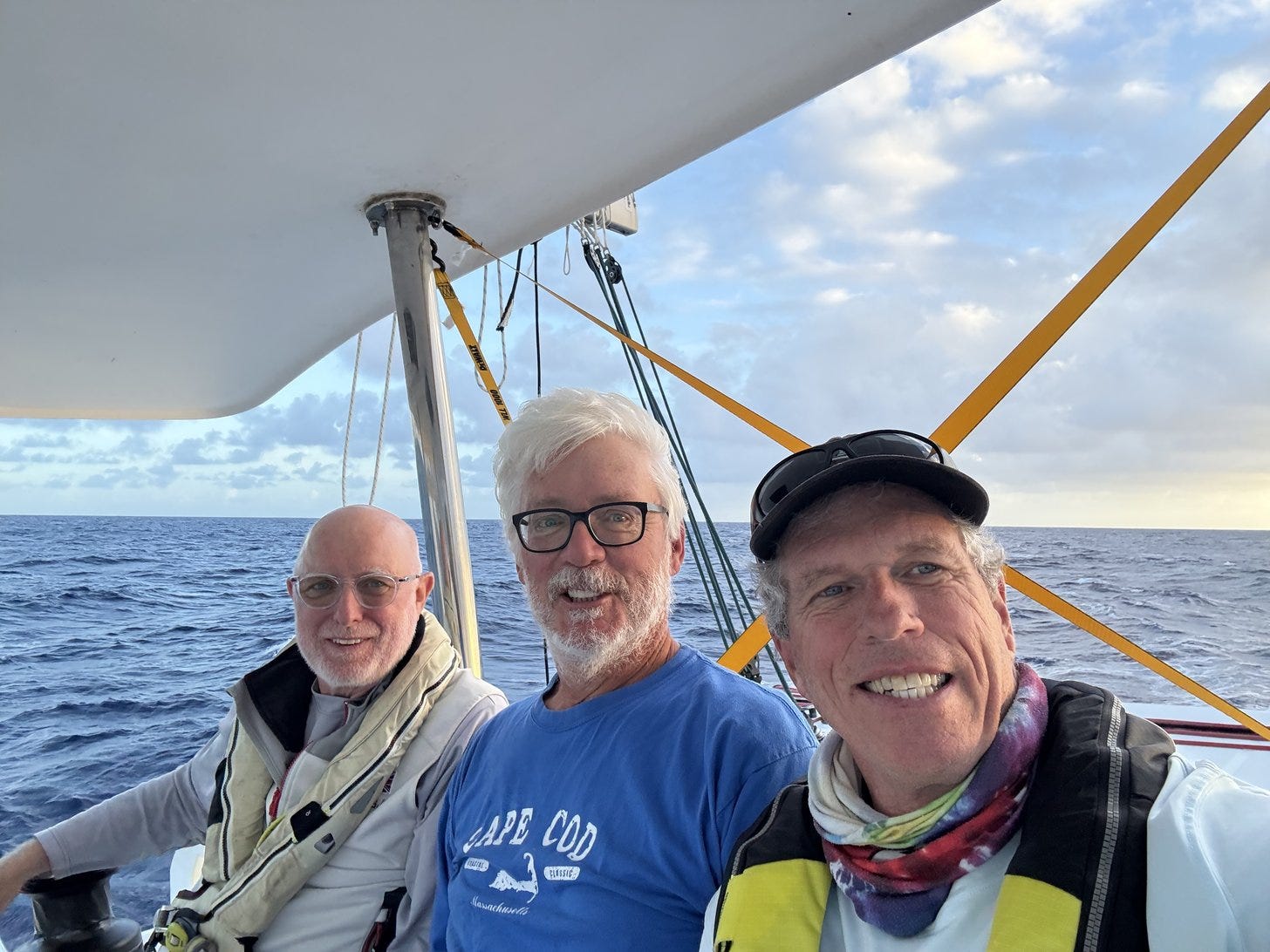
So I flew to Grenada, where Stephen and super crew Steve Devine met me at the airport. We provisioned at that big supermarket in St. George’s, then drove in a heavily laden taxi down to the boat to stow the food and run our final pre-departure checks.
Thirty-six hours later we cast off from the southeastern corner of the Caribbean Sea, headed for the Mona Passage.
Sailing 101 tells us that sailors almost never get between two points in a straight line.
However, conditions were unusually good (and I like to think the three of us were extraordinarily fine sailors), so we sailed a dead-straight line to our planned fuel stop at Puerto Real, the little marina on the western end of Puerto Rico.
Course steered 330 Degrees, distance 495 nautical miles, 66 hours 40 minutes sailed in a straight line.
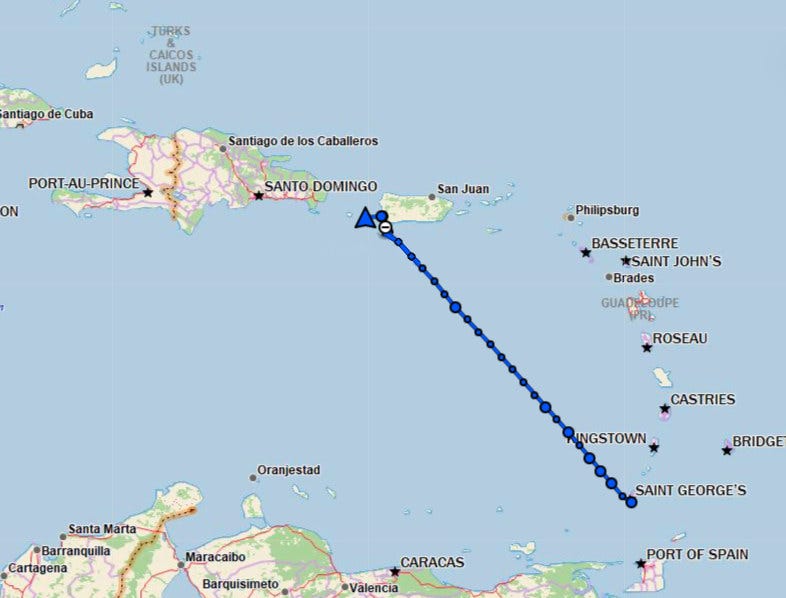
That was a first.
After a two-hour pit stop to top off the fuel and water tanks and pick up some fresh bread, we left the dock.
We transited the Mona Passage, then headed 335 degrees to find the westbound current and skirt the southwestern edge of the Bahama Bank with the weather GRIBs showing an ominous-looking frontal system moving towards us.
As the wind built to 25 knots, gusting 35, at 110 degrees off the starboard bow, we tucked in reefs and Callisto found her sweet spot. With 10-plus knots of boat speed and two more knots of favorable current, our VMG (Velocity Made Good, the actual speed along our planned course) was far better than we could have hoped. She was cutting through those building seas like a train.
The edge of the Bahama Bank curves north, and as our route followed it, our course kept edging north, from 250 toward 330 degrees. Our course to steer number was edging upwards.
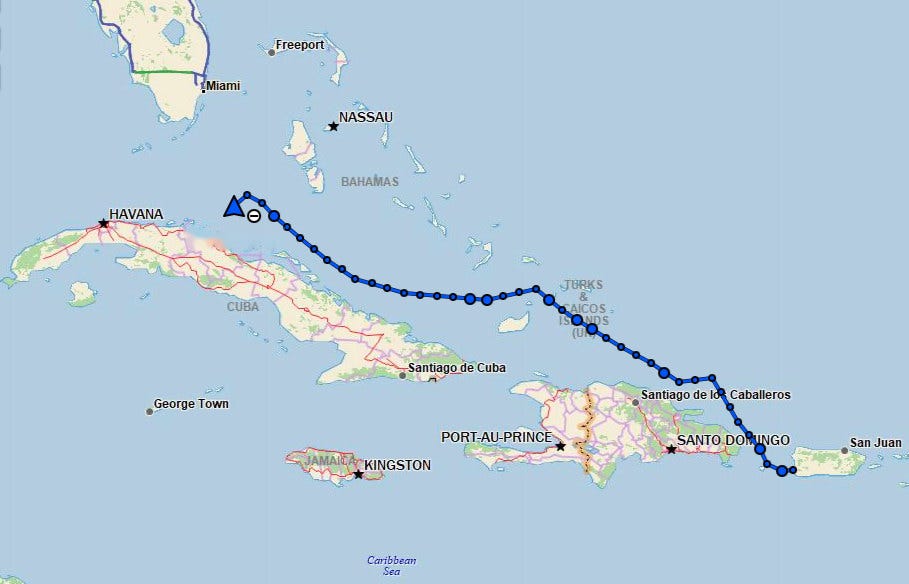
The wind was pretty much coming from due north, so the wind angle was moving from the perfect broad reach to a very uncomfortable beat. As the apparent wind increased, we started looking at the usual Plan B which is always to bear away and hold a safe wind angle until the wind has shifted.
Time and distance were not on our side, so we did almost a U-turn to the little-known Cay Sal Bank, where we anchored in the lee of Anguillas Cays.
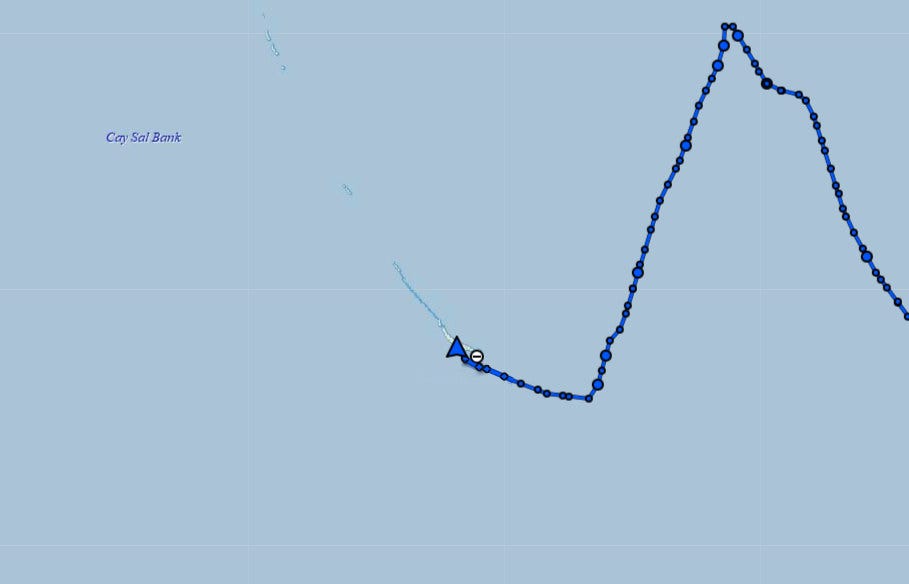
I have sailed this route many times in both directions but never stopped at this uninhabited cay. Stephen and Steve swam ashore and came back with stories of stumbling across recently deserted encampments with modern cooking equipment. Almost certainly a transit point on the drug-running route.
That was the second first.
I stayed on the boat, and out of nowhere came the words for a book. After noodling over numerous writing projects for the best part of 30 years, I finally had a complete manuscript that I was happy with. Freddy Learns To Fly at 750 words is no War and Peace, but it meant something and it was complete.
That was the third first.
We weighed anchor after 20 hours or so as the wind eased and continued the superfast ride to Fort Lauderdale.
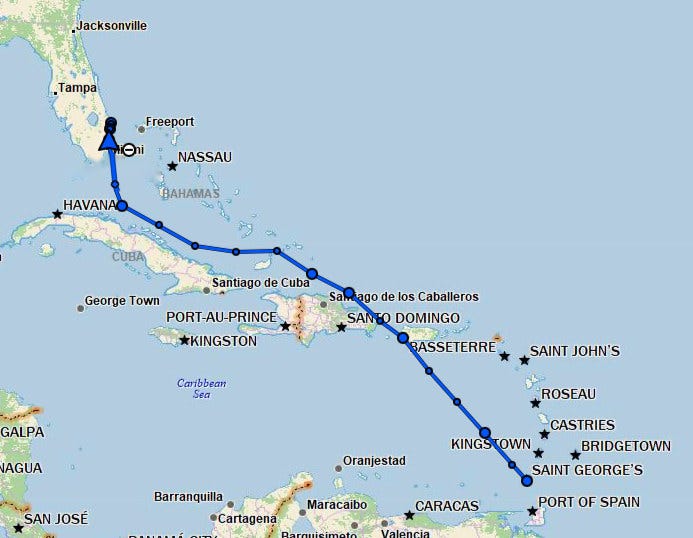
Callisto found a new owner in May 2026, and never again will these three salty characters sail together on that trusty Leopard.
That book, Freddy Learns To Fly, will be published in November 2026. A children’s book about what goes on below and a few feet above the oceans that I love to sail. A perfect maritime-themed picture book for your favorite 5- to 8-year-old, if I may so so.

Learn more at FreddyLearnsToFly.com